
vidNT patented tech

The AI‑NativeMulti‑CDN Stitcher.

A CDN fails mid-match — your viewers keep watching. Better quality and lower cost from the CDN contracts you already have.

What you getYour viewers keep watching — even when a CDN fails.
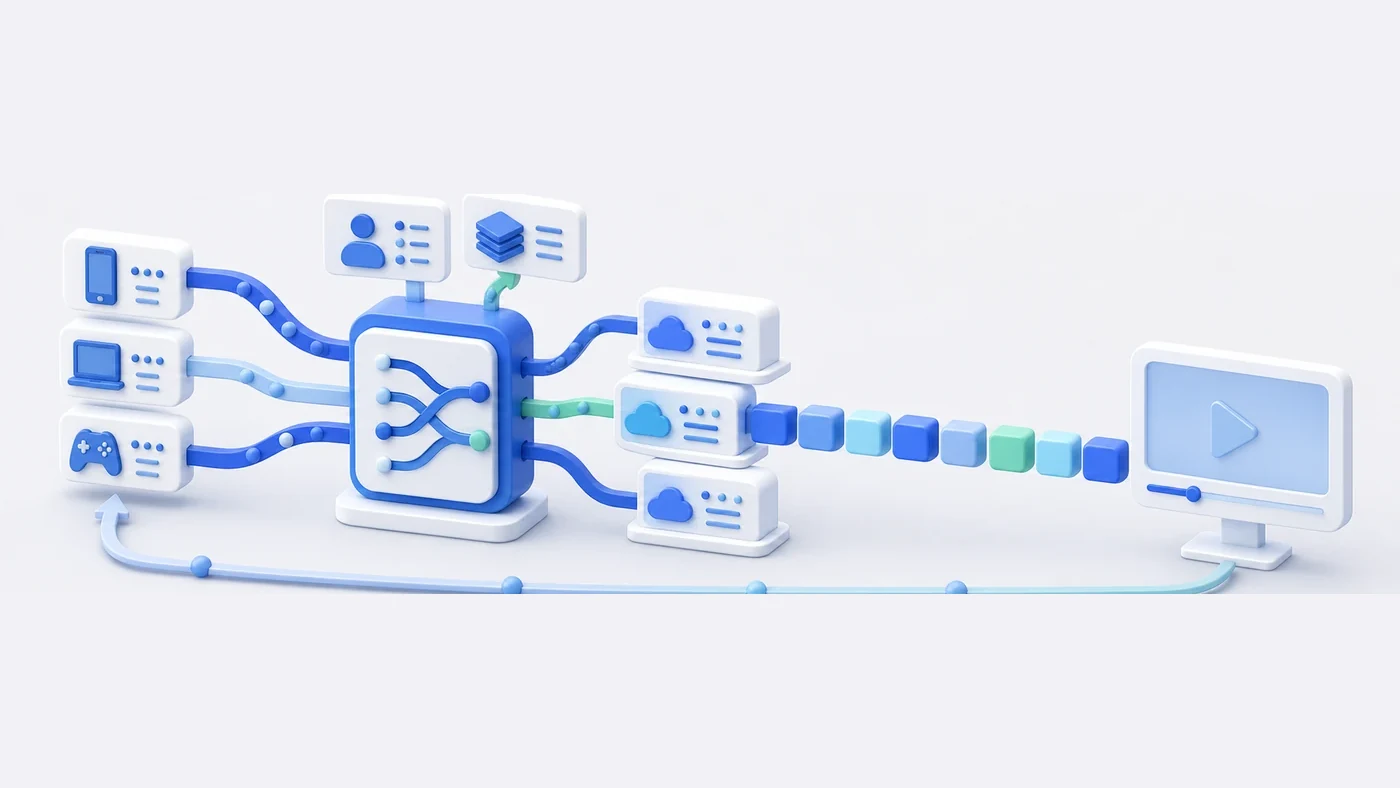
Viewers on phone, laptop and console feed into one routing core, which draws the next segments from several CDNs into a single continuous stream on the screen

    One-click migration tovidNT

    Click the one you run today — switching is the easy part

    Measured, not promised

    Stitch the stream. Then measure it.

    Every chunk on the viewer’s screen can come from a different CDN — stitched into one continuous stream. We run vidNT between two production CDN networks and break things on purpose. These are the measurements from that rig — real sessions, real CDNs, real faults.

    “The industry needed a bridge between these two worlds.”

    Will Law, Chief Architect at Akamai and co-chair of the CTA Common Media Server Data working group, on why CMCD exists — writing for DVB, October 2024. vidNT had already built that bridge, and patented it.
    99.97%
    Sessions survive a CDN failure
    0
    Viewers dropped during the switch
    3.6×
    Lower p95 latency on the chosen CDN
    2 s
    Connection to reconnect on another CDN
    We were here before the standard was

    We built this before the industry had a standard for it. Today the standard exists — and we already run the second generation.

    Our patents on mid-stream CDN switching were granted years before CMCD, CMSD and Content Steering were published. We speak all of them natively, including the extended CMCD field set — no custom SDK inside your player, no black box inside your delivery path.

    Bring what you already have

    Already using a CDN? See what we would do differently.

    Paste the playback URL of any live or on-demand stream. We read what is publicly there — nothing else — and tell you what your delivery looks like today.

    No sign-up and no credentials. We store a hash of the URL, never the URL itself.

    Start with what you already run.

    Check a stream in a few seconds, or import your current configuration and compare on paper before a single viewer moves.