It decides per viewer
Two people on the same street, on different networks, can need different CDNs. A regional weight gives them the same answer. vidNT gives each session its own.
How routing works
Personalized Video Stitching & Predictive Multi-CDN Engine
Others measure the experience. The brain improves it — before anyone opens a dashboard.
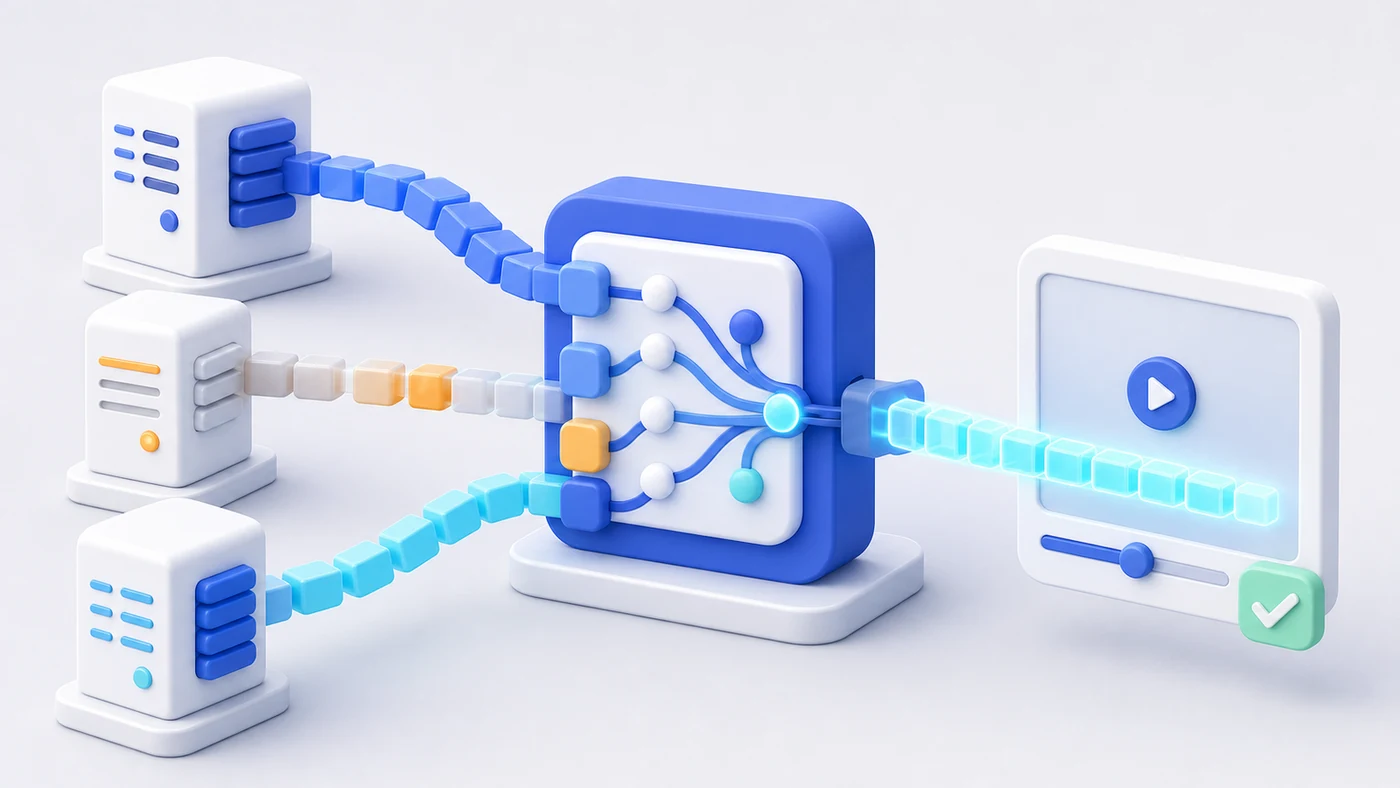
That is the whole argument. Everything below follows from it.
Two people on the same street, on different networks, can need different CDNs. A regional weight gives them the same answer. vidNT gives each session its own.
How routing worksCMCD (CTA-5004) carries buffer level, bitrate and stalls up from the player. CMSD (CTA-5006) carries the CDN's own view back down. vidNT routes on those — not on a synthetic probe alone.
About the signalsManifests are served by your CDNs, not by us. vidNT publishes its decisions ahead of time and steps aside. If we fail, delivery carries on with the last good answer.
The architectureVideo QoE measurement tools watch your stream and hand you a report when viewers suffer. vidNT takes the same signals — and acts on them, in the delivery loop, before the suffering starts.
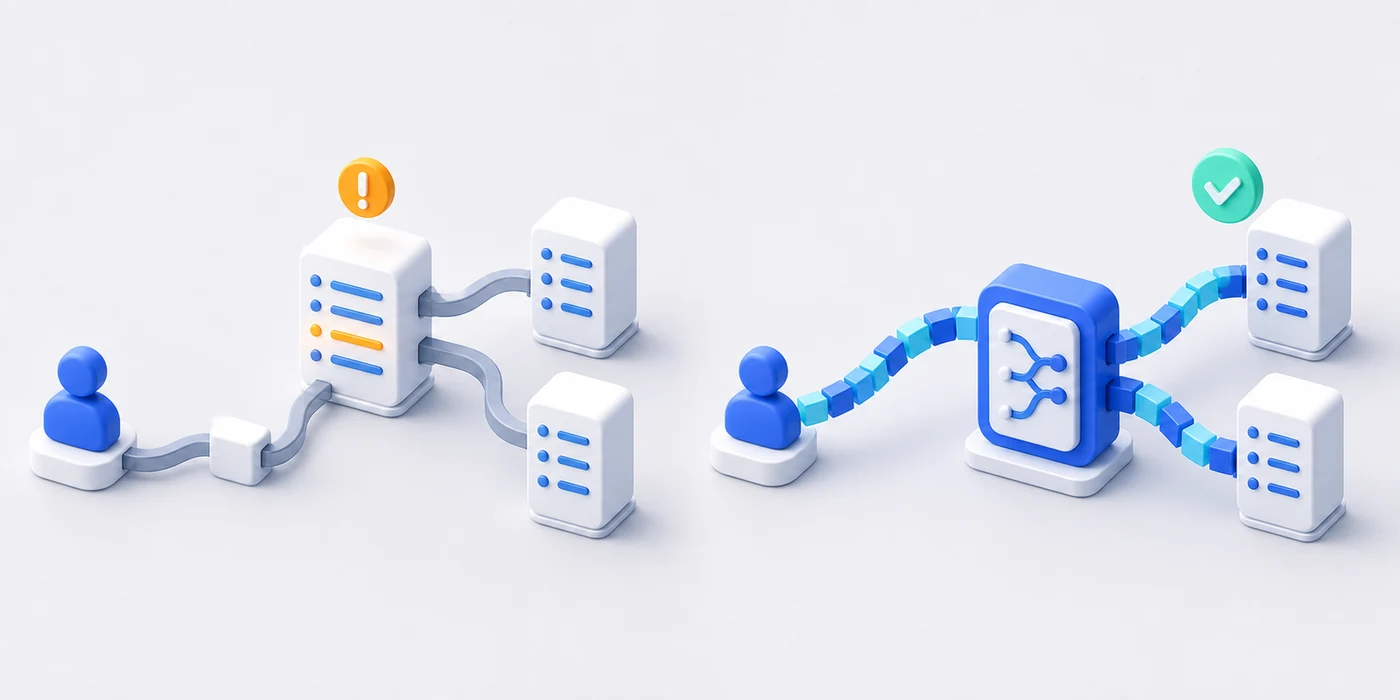
The best alert is the one that never fires. The best incident report is the one that never gets written.
The brain does not ask you to trust it. Every routing decision it makes is recorded with the signals that produced it, so the same data that drives the switch is the data you read afterwards — per CDN, per region, per access network, down to a single session. These are the shapes you actually work with.
The blended line is what your viewers actually got. When one CDN degrades, the routed line does not follow it down.
Share per CDN across the day, with the reason each shift happened attached to it — quality, capacity or cost.
A national average hides the one access network where viewers are suffering. This resolution is what makes the routing act.
Every number here is the same number the routing used — no separate reporting pipeline, no reconciliation, and no viewer identities anywhere in it. See the parameters we collect →
Prevention does not mean flying blind. Drill from the whole fleet down to a single session — per CDN, per region, per access network, per chunk — with every routing decision accounted for. And the pipeline is built to privacy rules: pseudonymous session IDs only, no viewer identity, location kept at geography level, aggregate views by default.
A viewer’s quality history is exportable on request through an authenticated, verified API — JSON or CSV. GDPR access is a feature, not a scramble.
Session tokens, never identities. No names, no e-mails, no accounts in the delivery pipeline — and location stays at geography level.
Telemetry fields are scrubbed at the door; opaque tokens are hashed before they are ever stored. What we don’t keep can’t leak.
No model trains on your traffic without a signed data-sharing addendum — scoped, revocable, and audited per request.
Privacy-relevant actions — including our own operators viewing your account — land in an append-only audit log.
GDPR, CCPA and Thai PDPA data-processing templates come with the product — in legal language and in plain English.
Leave your details and we open your access. A person comes back to you within one business day.
Open your assistant with a ready prompt — ask it anything about multi-CDN stitching, how vidNT fits your stack, or how to start.
The prompt asks your assistant to read vidnt.com/llms.txt and answer from it.